
Hot Flashes & Brain Fog: Navigating the 3 Stages of Menopause
For many women, menopause doesn’t arrive suddenly — it unfolds gradually, bringing changes that can feel confusing, uncomfortable, and sometimes overwhelming. Hot flashes, mood swings, weight changes, poor sleep, and low energy are often brushed off as “just aging,” yet they’re closely linked to shifting hormones during this phase of life.
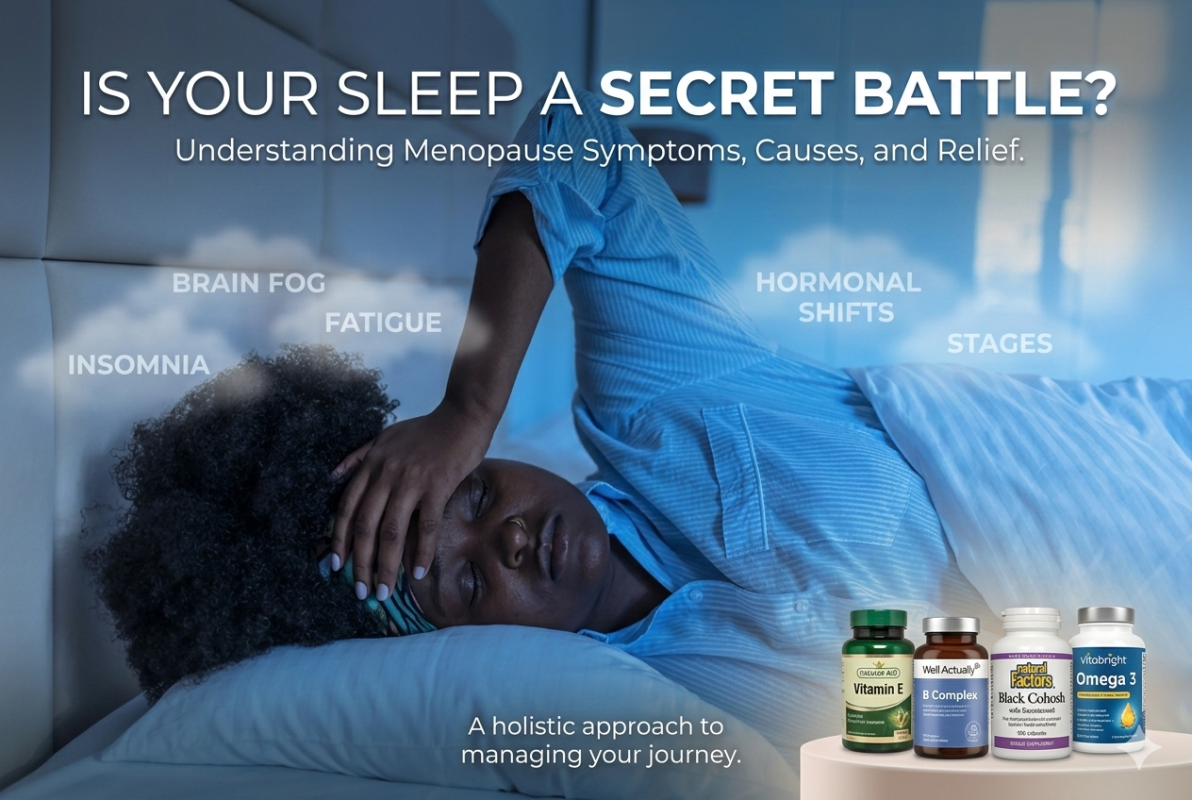
Menopause marks the end of a woman’s reproductive years, but it’s not a single moment, it’s a transition that happens in stages, each with its own set of experiences. Understanding what’s happening in your body can make this phase feel far less intimidating. In this blog, we’ll walk through the symptoms, causes, and stages of menopause, and explore supplements that many women use to support comfort, balance, and overall wellbeing during this transition.
Let’s break it down together.
What Is Menopause and Why Does It Happen?
Menopause occurs when the ovaries gradually reduce the production of hormones like estrogen and progesterone. As these hormone levels decline, menstrual cycles become irregular and eventually stop.
Common factors involved include:
- Natural aging and ovarian changes
- Gradual decline in estrogen levels
- Changes in how the body regulates temperature, mood, and sleep
Menopause is officially recognized after 12 consecutive months without a menstrual period, but symptoms often begin years earlier.
Common Symptoms of Menopause
Every woman’s experience is different, but many report a combination of physical and emotional changes, such as:
- Hot flashes and night sweats
- Irregular or missed periods
- Mood swings, irritability, or low mood
- Sleep disturbances and fatigue
- Weight gain or changes in body composition
- Vaginal dryness and reduced libido
- Joint or muscle discomfort
These symptoms can vary in intensity and may come and go over time.
The 3 Main Stages of Menopause
Understanding the stages helps explain why symptoms can feel unpredictable.
1. Perimenopause
This transitional stage can begin several years before menopause.
- Hormone levels fluctuate
- Periods may become irregular
- Symptoms like hot flashes and mood changes may start
2. Menopause
- Menstrual periods stop completely
- Hormone levels remain consistently low
- Symptoms may peak for some women
3. Postmenopause
- The years after menopause
- Symptoms may ease, though some persist
- Focus shifts to long-term bone, heart, and overall wellness
Lifestyle Habits That Influence Menopause Symptoms.
Certain everyday habits can affect how manageable symptoms feel:
- High stress levels
- Poor sleep routines
- Diets low in healthy fats and micronutrients
- Lack of regular movement
Wellness Tip: Gentle exercise, balanced meals, hydration, and stress management can make a noticeable difference over time.
Supplements Commonly Used During Menopause
Alongside lifestyle support, many women choose supplements to help support hormonal balance, comfort, and overall wellbeing during menopause.
At Health Cave, these options are commonly considered:
Vitamin E
- Supports antioxidant activity
- Commonly used by women experiencing hot flashes and skin changes
Vitamin B-Complex
- Supports energy metabolism and nervous system function
- Often chosen for fatigue, mood support, and stress management
Black Cohosh
- A traditional herbal supplement widely used during menopause
- Commonly chosen to support comfort during hot flashes and night sweats
Omega-3 Fatty Acids
- Support heart, joint, and brain health
- Also valued for supporting normal inflammatory balance
Important Note: Supplements are meant to support the body alongside healthy habits, not replace medical care or professional guidance.
Frequently Asked Questions About Menopause
Q: At what age does menopause usually start?
A: Most women experience menopause between ages 45 and 55, though timing varies.
Q: Can menopause cause weight gain?
A: Hormonal changes can influence metabolism and fat distribution, especially around the abdomen.
Q: How long do menopause symptoms last?
A: Symptoms can last a few years for some women, and longer for others.
Q: Is menopause the same for everyone?
A: No. Symptoms, timing, and intensity differ widely from woman to woman.
Menopause is a natural transition — not a condition to fear. With the right information, supportive habits, and mindful nutrition, many women find they can move through this phase feeling more confident and in control.
👉 Support your menopause journey with trusted wellness products from:
www.healthcave.co.ke
