
Low AMH: Does It Mean You Can’t Get Pregnant?
Sep
You went for a fertility check.
The results came back:
AMH: Low.
Naturally, you Googled it.
Ten minutes later you’re reading about “low egg count,” “diminished ovarian reserve” and suddenly one blood test feels like somebody has put a deadline on motherhood.
But here’s what you need to know:
Low AMH does not automatically mean you cannot get pregnant.
Let’s explain what that number actually means.
What Is AMH?
AMH (Anti-Müllerian Hormone) is produced by small developing follicles in the ovaries.
Doctors use it as one marker of ovarian reserve, information related to the remaining egg pool. AMH generally declines as ovarian reserve decreases, particularly with age.
Pregnancy depends on much more than one hormone:
Age
Ovulation
Egg quality
Fallopian-tube health
Reproductive health
Timing
Your partner’s sperm health
A woman with low AMH may still ovulate and may still conceive.
And importantly, AMH doesn’t directly measure egg quality. Quantity and quality are different things, with age being an important factor affecting egg quality.
Why Can AMH Be Low?
The most common reason ovarian reserve decreases is age, women are born with a finite number of eggs, and that number naturally declines over time.
Other factors may include ovarian surgery, certain medical treatments and individual biology.
Can You Increase AMH?
A better goal is to support your overall nutritional and reproductive health while getting appropriate fertility advice.
Start with balanced meals, adequate protein and healthy fats, regular movement, sufficient sleep, avoiding smoking and appropriate preconception care.
Then consider supplements strategically.
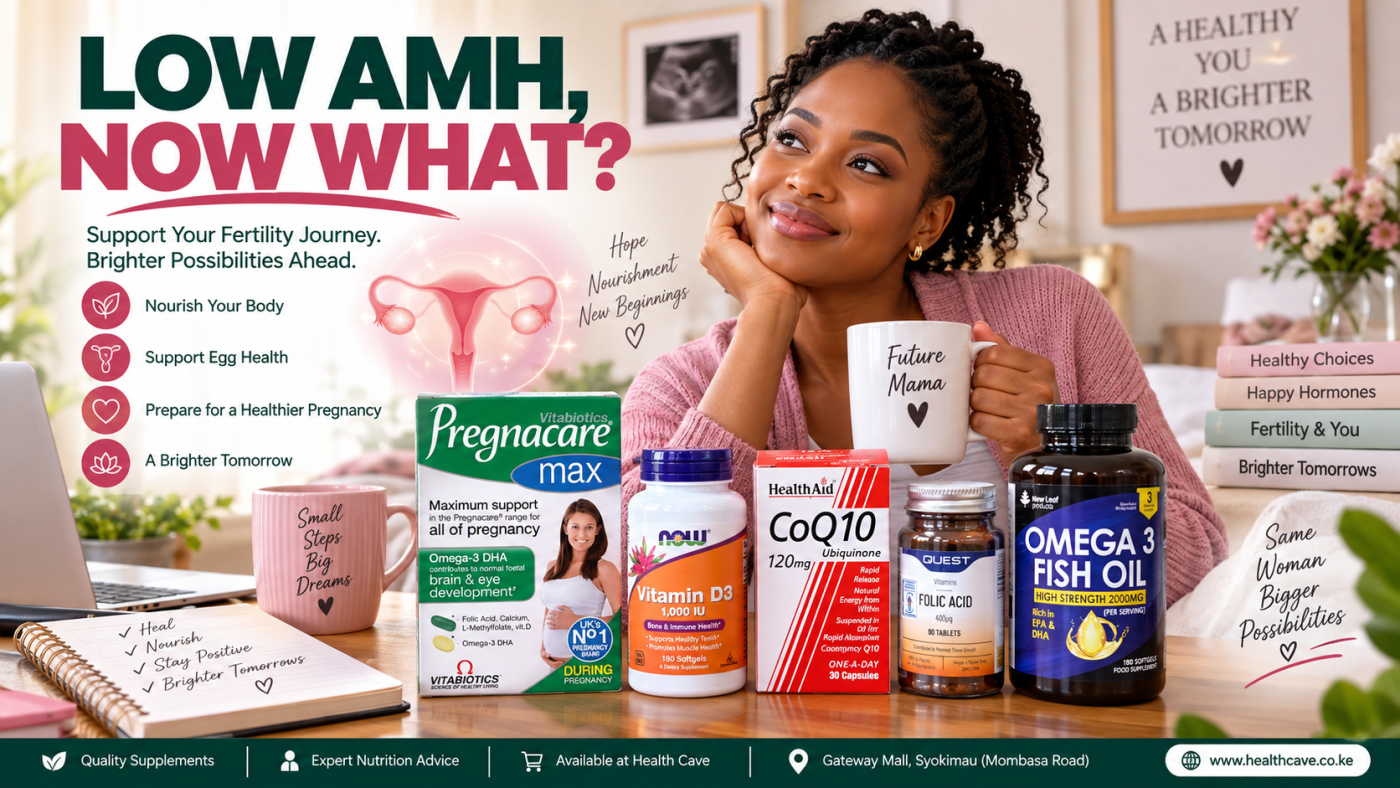
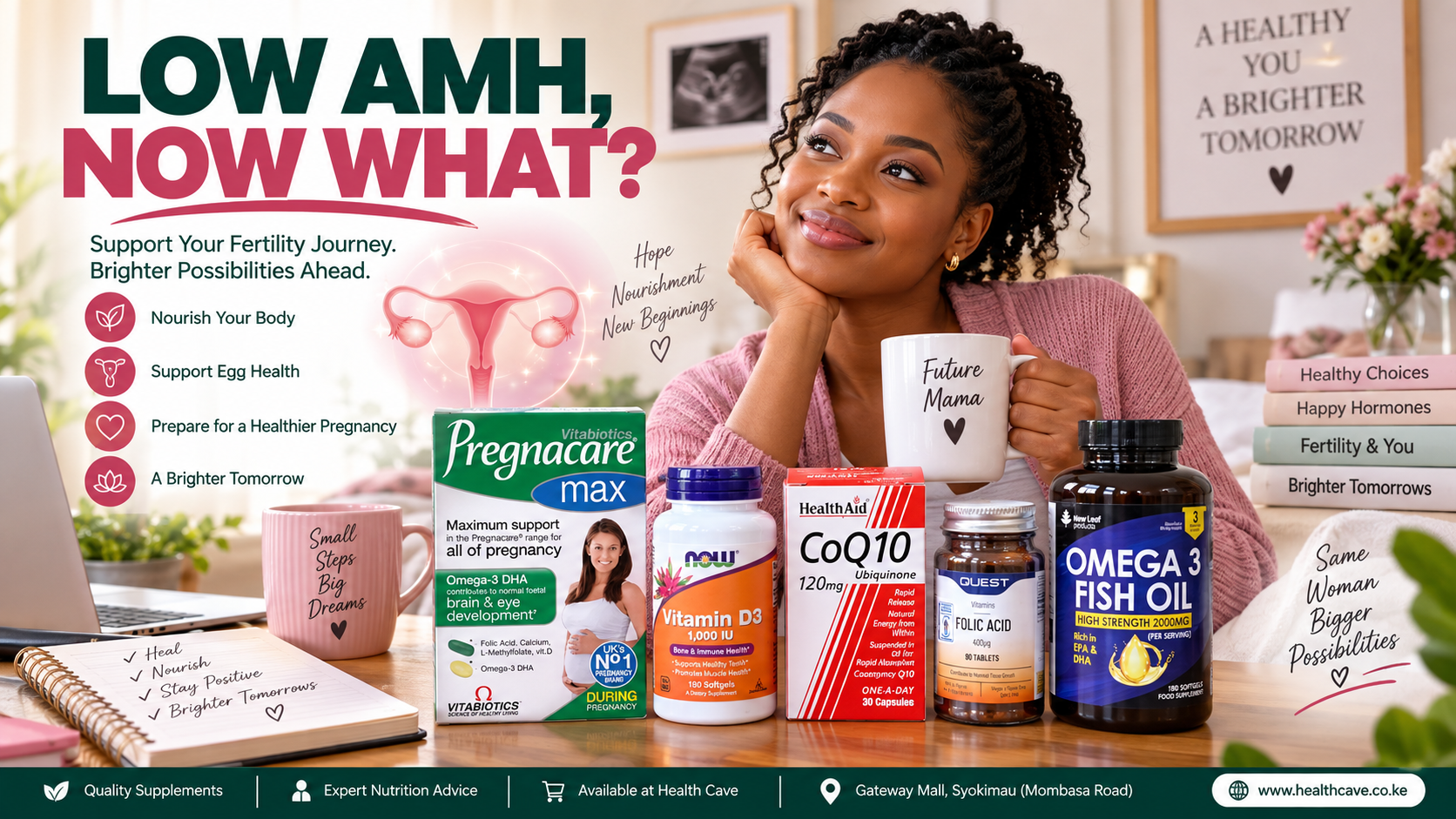
5 Supplements for Preconception Support
Think nutritional support, not fertility treatment.
1. CoQ10
Supports normal cellular energy production and provides antioxidant activity.
It has attracted interest in reproductive-health research and is commonly discussed in preconception and fertility settings.
2. Folate/Folic Acid
One of the most important nutrients before conception and during early pregnancy, with an established role in reducing the risk of neural-tube defects.
3. Omega-3
Provides essential fatty acids, including DHA and EPA, and can contribute to a balanced preconception nutrition plan.
4. Vitamin D
Important for normal body functions. If you’re deficient, correcting low vitamin D under appropriate guidance may be recommended.
5. PregnaCare
A good prenatal can conveniently provide several important preconception nutrients without requiring five separate bottles.
6. Myo inositol
Myo-inositol is frequently discussed online for fertility and has been studied particularly in women with PCOS.
But PCOS and low ovarian reserve are not the same thing.Low AMH doesn’t automatically mean you need inositol.
Seek individual advice particularly if you have irregular/absent periods, previous ovarian surgery, known reproductive conditions or difficulty conceiving.
And remember: fertility isn’t only a woman’s issue. Male-factor fertility should also be considered when a couple is struggling to conceive.
Frequently Asked Questions
Can I get pregnant naturally with low AMH?
It can be possible. AMH alone cannot determine whether natural conception will occur.
Does low AMH mean poor-quality eggs?
No. AMH primarily relates to ovarian reserve; it does not directly measure individual egg quality.
Can I still ovulate with low AMH?
Yes. Some women with low AMH continue to have regular cycles and ovulate.
Trying to Conceive?
Confused about CoQ10, prenatal vitamins, folate, omega-3, vitamin D or inositol?
Visit Health Cave at Gateway Mall, Syokimau (Mombasa Road) and speak with our nutritionists about your preconception nutrition and supplement routine.
Explore our women’s health range at healthcave.co.ke.
